






Digital receipts for business Australia have moved well past the early-adopter stage. Chasing down paper receipts used to be one of the most tedious parts of a bookkeeper's or accountant's job, and it's fast becoming a thing of the past.
However a receipt arrives, a photographed docket, an emailed tax invoice, or itemised data sent straight from a point-of-sale system, the job used to be the same: someone had to match it to a transaction, check the numbers, and code it correctly before it was ready for the books. Automated receipt capture removes that manual step, not by skipping it, but by doing it the moment the receipt exists.
Banks, businesses and consumers, closer than ever
More of the payments system now moves receipt data directly, without a person re-typing it in the middle. In some cases, a card network or point-of-sale system can push structured, itemised receipt data straight into a business's expense platform the moment a purchase happens, with GST already broken out and matched to the transaction. Other receipts still arrive the traditional way, a photo of a docket or a forwarded invoice, and get read and matched using OCR instead.
No more chasing receipts from clients, and no more checking data off a stack of paper.
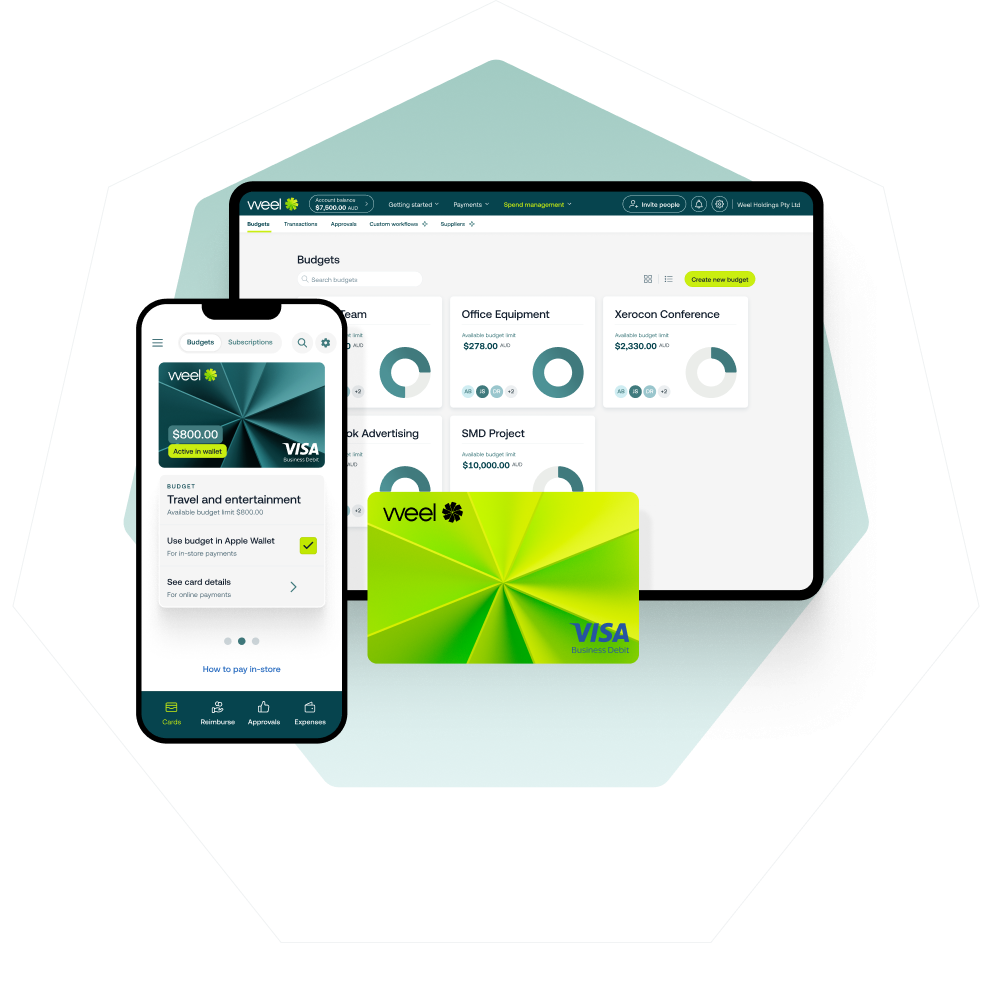
In the past, you might have had a company card and a separate expense management tool that didn't talk to each other, and the records ended up mismatched. Weel works as a one-stop shop: it handles the transaction, the data capture and the reporting all in one place.
How automated receipt matching actually works
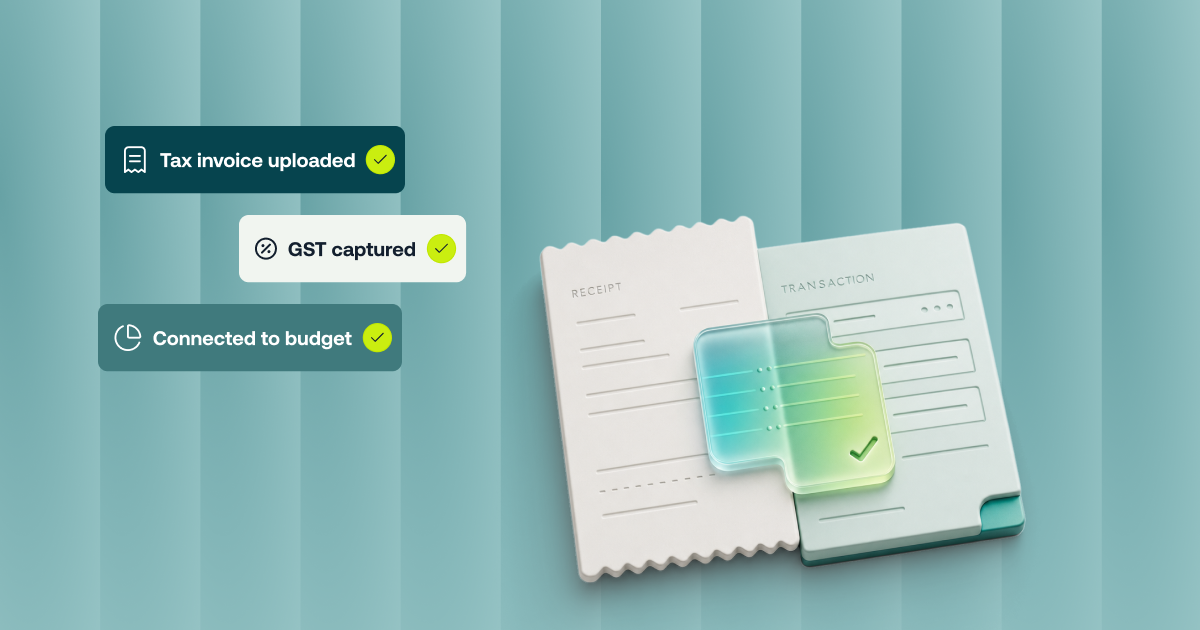
For anyone who hasn't sat inside this workflow day to day, it's worth walking through what "automated receipt matching" actually means in practice, because the phrase gets used loosely.
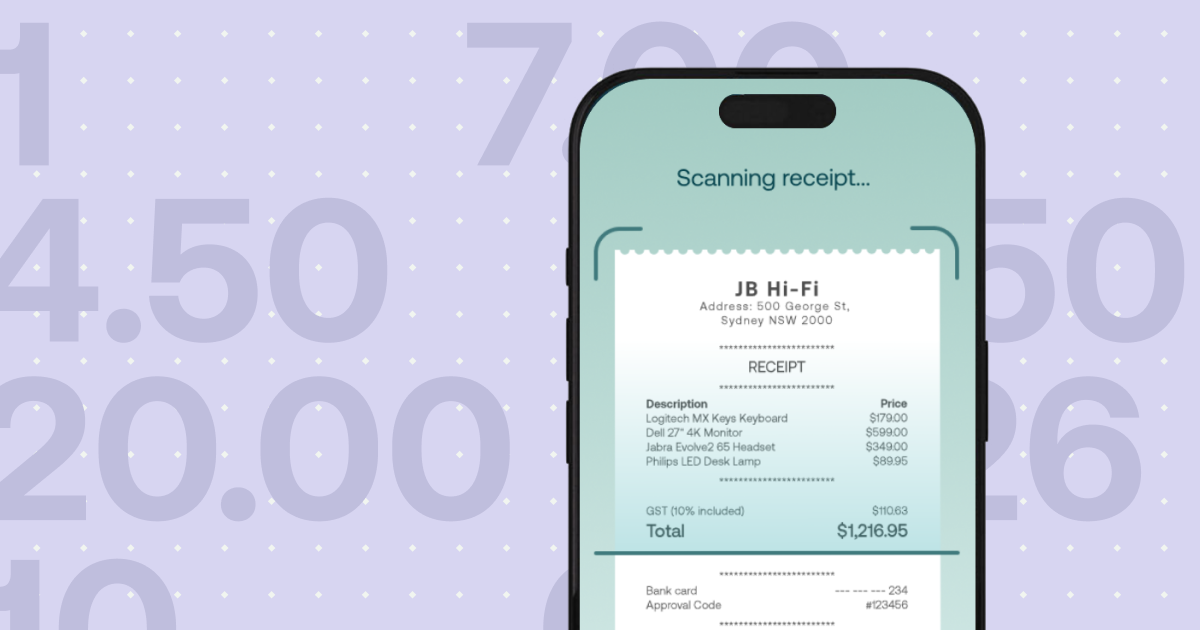
It starts with capture. A receipt arrives either as a physical docket photographed on a phone, an emailed tax invoice, or, increasingly, structured data pushed directly from the point of sale the moment a card is tapped. That last version skips a step everyone else still has: there's no photo to take and no PDF to forward, because the data was structured before it ever reached the business.
Next is extraction. Whether the source is a photographed docket or structured point-of-sale data, the system needs to read the supplier name, the date, the amount, the GST component and, ideally, individual line items. OCR-based tools do this by scanning an image and inferring the fields. Structured data skips inference altogether, because the itemised detail is already correct at the source.
Then comes matching. The extracted receipt data gets checked against the corresponding card transaction: same amount, same merchant, same rough timestamp, and the two records are linked. This is the step that used to be entirely manual, a bookkeeper holding a paper receipt in one hand and a bank statement in the other.
After matching, coding happens: the transaction gets assigned to the correct GL account and GST is applied correctly, ready for BAS. Finally, the whole coded, matched, GST-correct record exports to the accounting software (Xero, in Weel's case) without anyone re-typing a single figure.
Four steps: capture, extraction, matching, coding. Each one used to need a person. Now, for a growing share of transactions, none of them do.
From receipt to payment: closing the loop
Automated receipt capture solves half of the accounts payable problem: the record exists, it's matched, it's coded correctly. The other half is actually paying the bill, and until recently that still meant a separate step, often in a different part of the workflow entirely.
From August 2026, Weel's batch payments and BPAY bundle extends that same automation through to payment. Multiple approved invoices pay in one batch run rather than one at a time, and BPAY-billed suppliers settle without anyone leaving the platform to log into a separate banking portal. It's the same principle as receipt matching applied one step further down the chain: once something has been captured, coded and approved correctly, there's no reason a person needs to manually trigger the payment too.
For a finance team already using automated receipt capture to close the gap between a transaction and its record, this closes the next gap: between an approved bill and the money actually moving. The invoice or receipt isn't just correctly recorded, it's paid, and that payment reconciles back against the bank feed the same way a card transaction does. Half of all card transactions on Weel are fully coded, approved and ready for reconciliation within 24 hours; the same completion discipline now extends to bill runs, whether they're settled by bank transfer or BPAY.
Less manual checking is already changing the job
Automated receipt capture is part of a broader shift toward far more accurate transaction data, with a lot less manual checking needed to get there.
It started with manually tallying receipts. Then OCR meant accountants and bookkeepers could focus on just verifying receipts, so GST was read correctly and everything matched up.
That's freeing up time bookkeepers and accountants used to spend validating data, time better spent on higher-value work for clients.
That future isn't a forecast anymore: it's already showing up in the numbers. Across Weel's platform, the median time to capture a receipt is 4 hours, and 64% of receipts are captured within 24 hours. Off the back of 3.9 million cleared transactions, Weel's receipt attachment rate sits at 80%. Bookkeepers and accountants aren't waiting years for a shift like this: it's already part of how well-organised finance teams operate day to day.
Common receipt-chasing pain points, and how automation removes each one
The receipt that never turns up. An employee makes a purchase, forgets to keep the docket, and finance has no record beyond a card transaction with no supporting evidence. Automated capture removes this pain point at the source wherever structured receipt data is available, and narrows it everywhere else. Across Weel's platform, the receipt attachment rate sits at 80%, off the back of 3.9 million cleared transactions, a sign of how far this has already moved.
The Friday afternoon reminder email. Someone in finance spends part of every week chasing three or four people for missing receipts from two weeks ago. Automated matching removes the need for that chase, because the receipt is already attached and matched before the employee has opened their inbox. Half of all card transactions on Weel are fully coded, approved and ready for reconciliation within 24 hours.
Employee reimbursements stuck in limbo. The same chasing problem shows up on the reimbursement side: an employee pays out of pocket, submits a claim, then waits. On Weel, half of all reimbursements are paid within 24 hours, and over 80% clear within a week, a different experience to a claim that sits in someone's inbox for a fortnight.
Mismatched records at month-end. A card statement shows one amount, the receipt (if it exists at all) shows another, and reconciling the difference eats an afternoon. Automated matching removes this problem because the receipt and the transaction are tied together the moment both exist, not reconstructed after the fact.
GST errors discovered at BAS time. Manually coded GST is where mistakes hide, because it depends on someone remembering the correct treatment for a specific supplier or expense category. Coding GST correctly at the point of capture, rather than correcting it under deadline pressure, removes the error before it happens rather than after.
What finance teams should look for in receipt automation
Not all receipt automation is built the same way, and the difference matters more at tax time than it does day to day. A few things worth checking before choosing a tool:
A tool that answers those questions well removes work. One that answers them badly just moves the same manual checking further down the process.